
Tech Field Day
The Room Where Vendors Have to Be Real

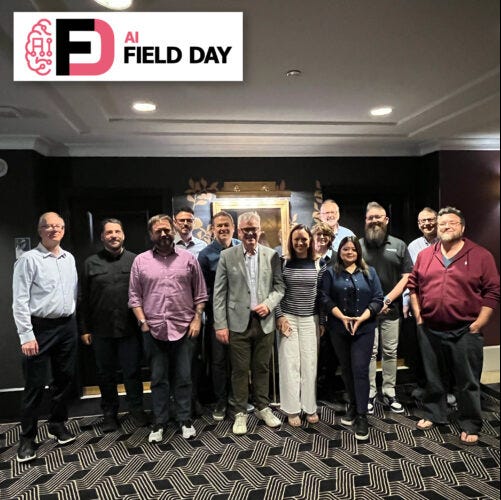
I was the practitioner — not a blogger, not an analyst, not someone with a platform. Just a network engineer who spent his days building and breaking infrastructure for a living. I had opinions about vendors, scars from failed change windows, and many 3am troubleshooting session burned into memory. What I didn’t have was any sense that those opinions were worth sharing in a room with the people who actually built the products.
I was wrong about that.
What I walked away from that first event with wasn’t a product review — it was a completely different model for how the relationship between vendors, practitioners, and technology evaluation actually works. The career I’ve built since, into network automation and AI systems, traces back in part to those early Tech Field Day events and the conversations I didn’t know I needed to have.
What Tech Field Day actually is
Tech Field Day has been running for 15 years. Stephen Foskett and Tom Hollingsworth at Gestalt IT built something that doesn’t fit neatly into any existing category. It’s not a conference, not an analyst briefing, not a press tour, not a marketing event — it operates at the intersection of all of those, with incentives that don’t serve any single one of them.
The format is straightforward: vendors present to a room of independent delegates who ask the questions. No conference badge, no sponsored lunch, no side event where marketing manages the conversation flow. Just the technology and the people who have to actually use it.
Each event covers a vertical slice of the industry. Delegates are selected for their relevance to that space; vendors present to people actively working in it. AIFD8, which I attended last week, covered AI infrastructure — storage, networking, observability, compute — in the context of actually running AI workloads. Not AI as a marketing topic. AI as an engineering problem.
Both sides of the table
I’ve presented at TFD as well as attended, which gives me an unusual read on how the format works.
As a delegate, you’re not there to be impressed. The room is full of practitioners who’ve been burned by products that demo clean and deploy badly. Questions come from people who’ve tried to do exactly what a vendor is describing and have clear opinions about where it breaks down in production.
As a vendor, that environment is clarifying in a way no internal QBR or customer advisory board ever is. Presenting at NFD19 and NFD28 as part of the Apstra team — then Juniper after the acquisition — I learned quickly that you have to know your product. Not the marketing version. The actual version: where it works, where it breaks, what it solves and what it explicitly doesn’t. Delegates find the edges in real time, on camera, and that conversation lives on the internet indefinitely.
That’s not a threat — it’s what makes the format valuable. The delegates are the people vendors usually can’t get direct access to: infrastructure architects, senior engineers, the practitioners who will actually deploy the product and live with the decision. Getting their unfiltered reactions in a room where they can’t be managed is exactly the kind of input that should be shaping product direction.
Who belongs in the room
Matt Conran, a first-timer at AIFD8, described finding himself at a table with people at the frontier of data, software, AI/ML, and bleeding-edge research for decades as “truly, humbling.” That feeling is real. I still get nervous at every event.
It’s also beside the point. You’re not there because you have the most credentials in the room. You’re there because you have a perspective worth bringing to the conversation. The network engineer who’s been stacking switches in a data center for ten years has context that no product manager or analyst has. The operations lead who’s been fighting alert storms at 2am has a question the vendor needs to hear.
TFD isn’t about being the smartest person in the room. It’s about whether you’re willing to engage honestly and ask the question you actually have.
If that sounds like the kind of conversation you want to be in, Gestalt IT actively looks for working practitioners to bring into the delegate seat. It’s worth exploring: gestaltit.com/field-day
What’s coming
Over the next few weeks I'm publishing practitioner reads on the vendors and technologies presented at AIFD8 — storage, networking, observability, compute, and where AI workloads actually meet infrastructure. If you're building or operating in that space, these are written for you.
---